
Article Brief
Avoid SIP mistakes! Explore why switching SIPs can negatively impact & how "reversion to the mean" impacts your Mutual Fund strategy. Invest smarter!
Systematic Investment Plans (SIPs) are a popular and powerful tool for building wealth in India . They allow you to invest a fixed amount regularly in Mutual Funds, leveraging the power of compounding over time.
However, a common SIP mistake investors make is frequently switching SIPs between funds, chasing past performance or reacting to market volatility. This article will explain why frequent SIP switching can be detrimental to your long-term financial goals and how the concept of "reversion to the mean" can impact your investment strategy.
What is Reversion to the Mean and SIP Performance
The financial concept of "reversion to the mean" suggests that over the long term, the performance of different asset classes tends to converge towards their historical averages. In simpler terms, what outperforms today might underperform tomorrow, and vice versa. This cyclical nature of the market makes it difficult to consistently time the market and pick top performers.
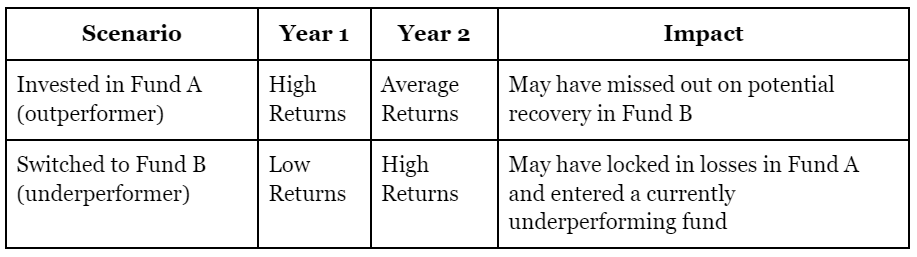
Here's a real-world example: Let's say Fund A outperforms Fund B significantly in year one. This might tempt you to switch your SIP from B to A. However, according to AMFI data, the SIP stoppage ratio in India reached a record high in May 2024, indicating a trend of investors exiting underperforming funds. But what if Fund B rebounds strongly in year two while Fund A experiences a correction? By switching SIPs based on short-term performance, you might miss out on the recovery of your original fund and potentially enter a fund that's about to underperform.
Table 1: Potential Impact of Frequent SIP Switching
The Pitfalls of Frequent SIP Switching
There are several downsides to frequently switching SIPs:
- SIP Switching Costs: Every time you switch SIPs, you might incur exit loads (charges for exiting a fund within a specific timeframe) and brokerage fees, eating into your potential returns.
- Disruption of Compounding: Compounding is the "magic" of long-term investing, where your returns generate further returns. Frequent switching disrupts this process, hindering your wealth creation potential.
- Missing Out on Market Recoveries: Markets are inherently volatile, with periods of ups and downs. By constantly switching based on short-term performance, you risk missing out on potential recoveries in your original fund.
- Emotional Decision-Making: Frequent switching can be driven by fear of missing out or panic during market downturns. A disciplined investment strategy based on your risk tolerance and financial goals is key to long-term success.
Alternatives to Frequent SIP Switching
Instead of constantly switching SIPs, consider these strategies:
- Invest for the Long Term: SIPs are best suited for long-term wealth creation (ideally 5 years or more). Focus on your financial goals and choose a diversified portfolio of Mutual Funds aligned with your risk appetite.
- Rebalance Your Portfolio Regularly: Periodically review your asset allocation (the mix of different asset classes in your portfolio) and rebalance if needed. This guarantees that your portfolio remains consistent with your investment objectives and risk tolerance.
- Seek Professional Guidance: If you're unsure about choosing the right SIPs or managing your portfolio, consider consulting an Investment Advisor for personalized advice.
SIP vs Lump Sum Investment: Choosing the Right Approach
While SIPs encourage disciplined investing through regular contributions, some investors might consider a lump sum investment. Here's a quick comparison:
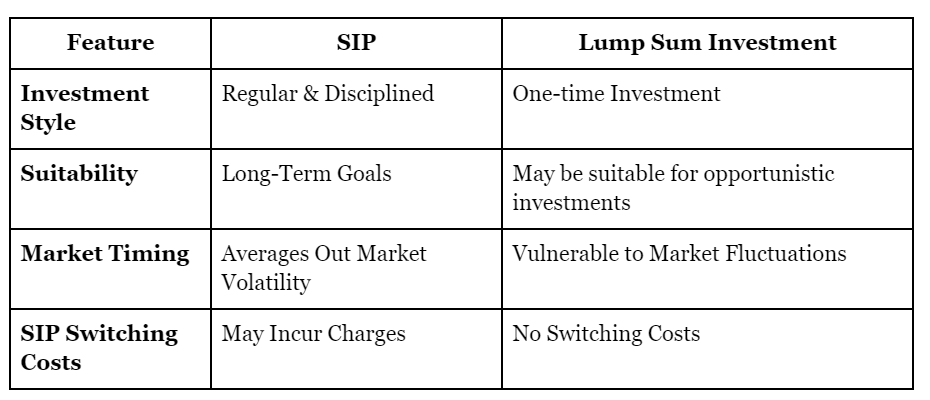
Ultimately, the best approach depends on your financial goals, risk tolerance, and investment horizon.
Conclusion
Frequent SIP switching can be a costly mistake that hinders your long-term investment journey. By understanding the concept of reversion to the mean and adopting a disciplined approach, you can leverage the power of SIPs to achieve your financial goals. Remember, consistency and a long-term perspective are key ingredients for successful investing in Mutual Funds through SIPs. Explore SIP options, choose a plan that aligns with your goals, and embark on a disciplined investment journey. Book a free wealth consultation call today
(Disclaimer: The article is only for educational purposes and is not to be construed as tax advice. Past performance is not necessarily indicative of future results. It's crucial to conduct your own research and consider your investment goals and risk tolerance before investing in any ELSS fund.)